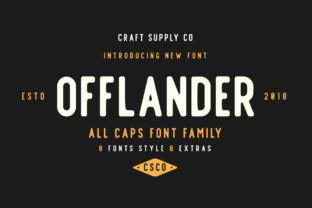
Offlander Family: Creative Direction for Modern Brands
Creative work thrives when there is a clear sense of identity, purpose, and cohesion. That is exactly what Offlander Family brings to the table—a creative framework that blends storytelling, visual consistency, and brand strategy into something that feels both intentional and alive. Whether you are a designer building a brand from scratch, a marketer shaping a campaign, or a small business owner trying to find your visual voice, Offlander Family offers a way to think about creative direction that is grounded, adaptable, and genuinely useful.
At its core, Offlander Family is not a rigid system or a one-size-fits-all template. It is a creative approach that emphasizes family-like cohesion across visual and narrative elements—where each piece relates to the others without losing its own character. Think of it as a creative ecosystem where typography, color, imagery, tone, and messaging work together like members of a family: distinct yet unmistakably connected. This idea resonates with anyone who has struggled to keep a brand or project feeling unified across different platforms, formats, or audiences.
What Makes Offlander Family Stand Out
The most compelling aspect of Offlander Family is its emphasis on relationships over rules. Many branding systems rely on strict guidelines that can feel restrictive, especially when you are trying to experiment or adapt to different contexts. Offlander Family flips that by focusing on how elements relate to one another rather than how they must behave in isolation. This creates room for flexibility without losing coherence.
For example, a color palette might include four hues that feel harmonious but are not identical. A typeface family might offer three weights that share a common structure but serve different purposes. The imagery might range from candid photography to styled still life, yet all share a consistent mood or lighting approach. This relational thinking is what makes Offlander Family especially useful for creators who work across multiple disciplines or who need to scale a brand without repeating the same visual formula again and again.
Another distinguishing feature is the emphasis on narrative. Offlander Family encourages you to define the story your brand or project tells before you settle on any visual element. That narrative becomes the anchor—the thing that holds everything together even when the medium changes. This is incredibly valuable for educators building course materials, bloggers developing a visual identity, or freelancers pitching their services to diverse clients.
Creative Possibilities with Offlander Family
Once you understand the relational and narrative logic behind Offlander Family, the creative possibilities open up considerably. You are not limited to a single aesthetic or format. Instead, you can explore variations that still feel like they belong to the same creative ecosystem.
Visual Variations That Stay Connected
One approach is to create a set of visual assets that share a common DNA but adapt to different contexts. For instance, you might design a primary logo for a website, a simplified version for social media avatars, and a wordmark for print materials. Each version looks slightly different, yet they all share the same typographic roots, color relationships, or spacing logic. This is where Offlander Family shines—it gives you permission to adapt without starting over.
For a designer working on a brand identity, this could mean developing a suite of patterns, icons, and textures that all draw from the same geometric language. For a blogger, it might mean using the same photo editing preset across different image types so that portraits, product shots, and flat lays all feel visually consistent.
Narrative Flexibility Across Platforms
Offlander Family also works beautifully when you need to shift tone or format for different platforms. A brand that feels polished and editorial on Instagram can feel warm and conversational in an email newsletter, as long as the underlying narrative stays intact. The key is to define the core story—what you stand for, who you serve, and what makes your work distinct—and then let that story guide your choices on each platform.
A marketer might use Offlander Family to create a campaign that feels cohesive across a website, a LinkedIn article, and a podcast episode. The visual and verbal elements shift to match the medium, but they all reinforce the same core message. This is far more effective than trying to force the same content into every format without adaptation.
Adapting Offlander Family for Different Audiences and Goals
Different users will find different value in Offlander Family depending on their goals. For entrepreneurs and small business owners, the framework offers clarity without complexity. You do not need a large design team to apply it. You can start by defining your narrative and then choosing two or three visual elements that feel true to that story. Over time, you can expand the family as your business grows.
For freelancers and creators, Offlander Family can be a powerful tool for building a recognizable personal brand. Instead of jumping between different styles for each project, you can develop a family of visual and verbal elements that represent your unique perspective. Clients and audiences will begin to recognize your work even before they see your name. This is especially useful for illustrators, writers, photographers, and educators who want to stand out in a crowded space.
Marketers and publishers can use Offlander Family to create series, campaigns, or content pillars that feel connected across multiple touchpoints. A magazine, for example, might use the same typographic hierarchy and color accents across print issues, digital articles, and social posts. Readers come to expect that visual language and feel a sense of familiarity, which builds trust and engagement over time.
Practical Project Ideas Using Offlander Family
If you are looking for concrete ways to apply Offlander Family, here are a few project ideas that suit different creative roles:
- Brand identity system: Create a brand toolkit that includes a primary mark, secondary marks, a color system with relational rules, and a typographic hierarchy. Document how each element relates to the others so that anyone on your team can apply the system consistently.
- Social media content family: Develop a set of post templates, story formats, and cover images that share the same visual DNA without looking identical. Use Offlander Family principles to guide how colors, fonts, and imagery shift across different content types.
- Digital product design: Build a UI component library where each element—buttons, cards, modals, icons—feels connected through shared spacing, rounded corners, or color relationships. This creates a cohesive user experience without relying on heavy documentation.
- Personal portfolio: Apply Offlander Family to your own portfolio site. Let your work samples vary widely in content, but unify them through a consistent layout rhythm, a limited color palette, and a repeatable grid structure.
- Email newsletter series: Design a newsletter template family where the header, body, call-to-action, and footer all share visual cues. Then create variations for different types of content—announcements, tutorials, curated lists—while keeping the family resemblance intact.
Each of these projects benefits from the relational thinking that Offlander Family promotes. You are not locked into a single look, but you are always guided by a sense of belonging.
Keeping Your Work Clear, Consistent, and Audience-Friendly
One of the most practical aspects of Offlander Family is how it helps you maintain clarity and consistency without sacrificing originality. The key is to document your choices in a way that is easy to reference and update. You do not need a massive brand guidelines document. A simple one-page reference that lists your core narrative, primary visual elements, and relationship rules can be enough to keep your work aligned.
When working with Offlander Family, it also helps to test your system across different formats before finalizing it. Place your logo on a business card, a mobile screen, and a banner. See if your color palette works in both light and dark backgrounds. Read your brand voice in a short social post and a longer article. These tests will reveal where your family needs more flexibility or tighter constraints.
Audience-friendliness is another area where Offlander Family excels. Because the framework prioritizes relationships over rigid rules, it naturally adapts to different audience needs. A younger audience might respond to bolder colors and more dynamic layouts, while a professional audience might prefer cleaner typography and restrained imagery. The family can flex in either direction as long as the core narrative and relational logic remain intact.
Why Offlander Family Works for Different Creative Roles
What makes Offlander Family so broadly applicable is that it does not demand technical expertise or expensive tools. A designer can dive deep into the visual nuances, while a blogger or educator can apply the same principles with minimal design skills. The framework is inherently scalable and human-centered. It grows with you and your projects.
For educators, Offlander Family can structure course materials so that each module feels like part of a cohesive learning journey. For hobbyists, it can bring a sense of intentionality to creative projects without making them feel overly formal. For entrepreneurs, it provides a clear path to building a brand that feels authentic and recognizable, even on a tight budget.
Ultimately, Offlander Family is about making creative decisions with confidence. When you understand the relationships between your visual and narrative elements, you stop guessing and start choosing with purpose. That is what makes it such a valuable framework for anyone who creates, communicates, or builds.
Whether you are launching a new brand, refreshing an existing one, or simply looking for a more coherent way to express your creative vision, Offlander Family offers a grounded, practical, and inspiring approach. It invites you to think of your work not as a collection of isolated pieces, but as a family of connected ideas—each one distinct, yet unmistakably part of the whole.